
'It's a post, Jim, but not as we know it'
Facts and photos only this week

Well, what have you got to say for yourself young lady?
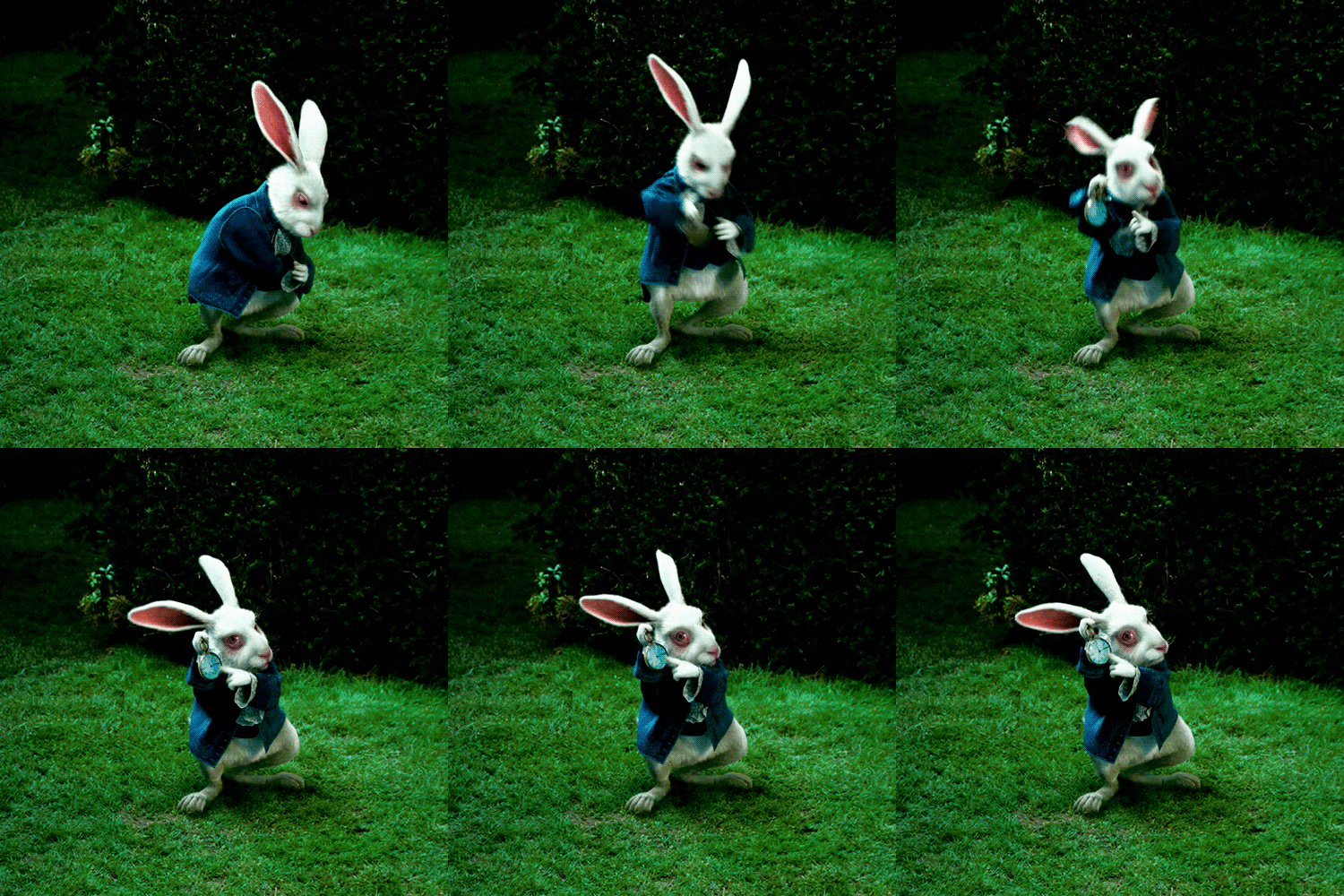
Hello, strangely sinister white rabbit! Yes, you have a point. It’s Friday and I’m meant to post on a Thursday. And you can waggle your finger and tut all you like, but it won’t make a scrap of difference. You see, I write this newsletter because I like writing about things and I do it for free and that means that while I recognise the benefits of regularity I also won’t beat myself up for minor deviations to a schedule that I arbitrarily established as being a reasonable compromise between time invested and likelihood of connecting with new readers. [Breathe]. So there. And also, why do you wear a coat but not trousers?
And the white rabbit looked at me, slack-jawed and incredulous. And then he vanished in a little puff of smoke. And so here we are.
All of that to say that this week’s newsletter is a bit late, which I’m not really bothered about. But also a bit lean, because it’s Easter and I’ve given myself a break. I started to write a feature piece and it’s almost there but not quite, so rather than bust a gut trying to send it out for the sake of it, I’m taking a step back and letting it simmer. I shall send it out another time. And that’s totally fine.
So instead, here are some things I’ve found interesting from recent book research, and a few more photos. I hope that you’ve had been able to take some time for you over the Easter period, and got out to enjoy a few of the beautiful things that are happening in the natural world. Normality will resume in a fortnight.
Some interesting things
I’ve been doing quite a lot of research on scavengers recently, and one of the things I’ve learned is that we humans have weirdly acidic stomachs. On a scale from 0 to 14, where 0 is extremely acidic (like concentrated hydrochloric acid), and 14 is extremely alkaline (like sodium hydroxide, i.e. lye/caustic soda), our stomach pH is about 1.5. This is the same as a possum and closer to that of vultures, whose stomach acid is often likened to battery acid, than our closest primate cousins (chimpanzee stomach acid is closer to neutral). This suggests that scavenging for carrion may have been more important in human evolution than generally thought, since more acidic conditions are better for killing pathogens that may live in carcasses. Sources here and here.
The largest birds capable of flight are the Andean condor, with a typical weight of 15 kg and wingspan up to 3.5 metres, and Kori bustard, males of which can be heavier at 18 kg but with shorter wings. They seem to be close to the very limits of what is possible for flight, because their large size makes it challenging to get off the ground. Consider then, that there was once a prehistoric vulture called Argentavis magnificans that had an estimated weight of 72 kg and a wingspan of seven metres. This predatory behemoth could not have flapped its way into the air. Instead, it seems likely that it used slopes and headwinds to launch itself, much like a modern hang glider. More info here.
Did you know that one teaspoon of soil contains more living organisms than there are people in the world? Soils are among the most biologically diverse habitats on Earth, and it has been estimated that 1 gram of soil contains up to 1 billion bacteria cells, up to 200 metres of fungal hyphae, and a wide range of tiny animals, including nematodes, earthworms, and arthropods. Given that, and how vitally important healthy soils are for all life on earth, I think we need to show much more love for the mud! More on soil biodiversity here.
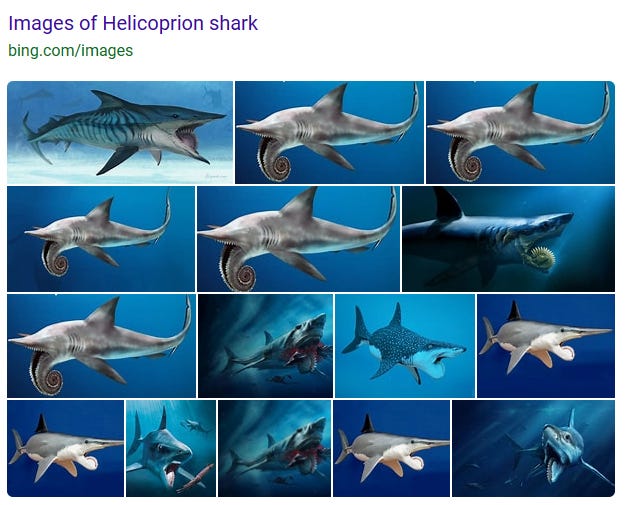
Ok, this last one is crazy. And it’s something that I came across not by looking into the scientific literature but because I was shown it by a friend’s child, who saw it in his book. Which I absolutely love. It’s the Helicoprion shark, aka the spiral-toothed chimeroid. Basically, a prehistoric shark with a circular saw fused to its face. I wanted to add an image in here to show what it looked like, but the truth is it’s a long extinct shark made of cartilage (that doesn’t fossilise well) and therefore nobody really knows. Below are a few of the artistic attempts that pop up if you do a search... More info here.
#NaturePhotoADay
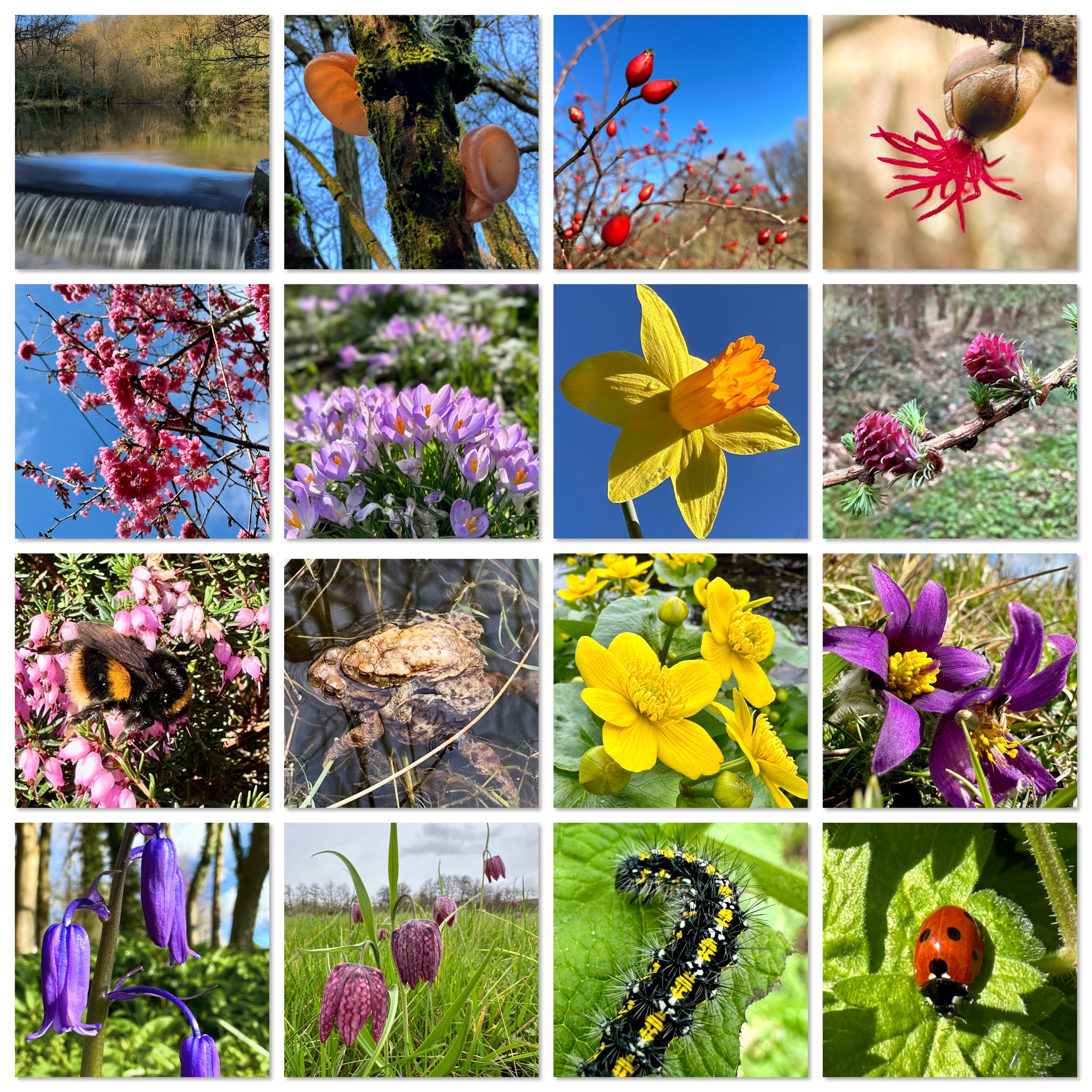
If you follow me on Instagram, you’ll see that late on New Year’s Day I decided to set myself the challenge of starting a nature related Project365 (this year, #Project366), meaning I have committed to sharing one nature photo every day for the whole of 2024. Usually, I just share my favourite from the last two weeks, but since we’re now over a quarter of the way into 2024 I thought it might be nice to summarise the last three months. From top left (January 1st, where it all started) to bottom right (yesterday, spotting little critters in wild verges), with jelly ears, rosehips, hazel flowers, cherry blossom, crocuses, daffodils, larch flowers, big queen bumblebees, fornicating toads, marsh marigold, pasqueflowers, bluebells, fritillaries, caterpillars and so much more in between. I am looking forward to seeing what the next three months brings!
Thank you so much for reading my newsletter! If you enjoyed this one, it would mean the world to me if you shared it with others who might be interested and/or restacked it on the Substack platform. And if you’re not already subscribed, it is free to do so and means these will come straight to your inbox.
Thank you for this interesting and fun post.